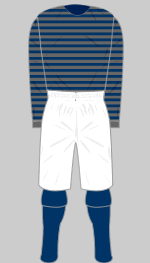
1st Lanarkshire Rifle Volunteers
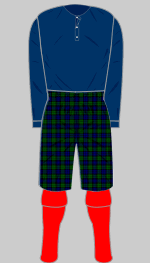
10th Lanarkshire Rifle Volunteers
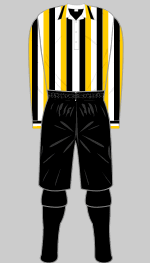
1st Renfrewshire Rifle Volunteers
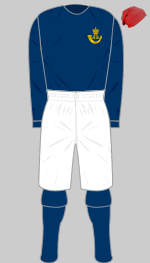
1st Surrey Rifles
Volunteer Rifle Regiments were part of a citizen army that existed throughout the British Empire, the forerunners of the modern Territorials. Many of the Scottish units formed football teams to provide recruits with healthy exercise and build team spirit. 1st Lanarks played at Burnbank in Glasgow between 1874 and 1879: the last reference to them was in 1883.
The 10th Lanarkshire RV played between 1884 and 1886 wearing knickerbockers made up from the Black Watch tartan.
Also known as the Greenock Volunteers, the team started out at senior level in 1884 before joining the Scottish Junior FA in 1890. They were disbanded in 1908 when the Volunteer Forces were reformed to create the Territorial Army.
Part of the 6th London Brigade, the 1st Surrey Battalion entered their team in the FA Cup between 1872 and 1878.
(Peter Ferrette)
Adventurers
Aldenham School
Alexandra Athletic
All Saints
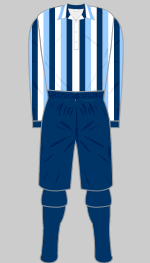
This splendidly named club played in Edinburgh between 1888 and 1906. The colours illustrated were worn from 1890 until 1901. For a while they also played in Musselburgh.
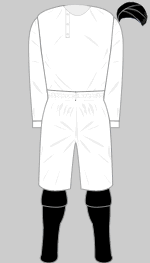
One of the public schools that pioneered the game, Aldenham codified their own form of football in 1825. The school was the location for Lyndsey Anderson's landmark film, If...
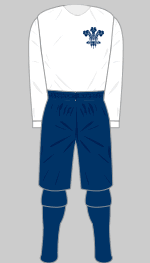
Formed in 1873, Alex played at Cumbernauld Road in Glasgow and were one of the pioneers of the Scottish game. They disappeared in 1884.
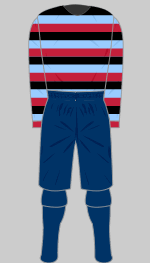
Formed in 1882, All Saints played in Newcastle city centre and were the first winners of the Northumberland Junior Cup in 1884.
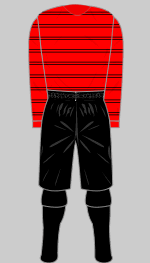
Alnwick
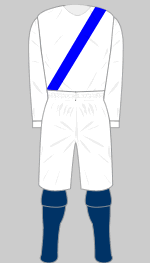
Annbank
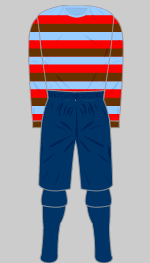
Arbroath Wanderers
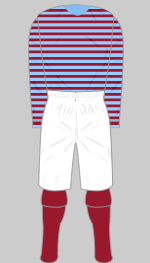
Aston Unity
One of the first clubs formed in the north-east (1879), Alnwick come from the picturesque town of that name in rural Northumberland.
This Ayrshire team played mainly in regional competition and was wound up in 1920. Illustrated are their original colours from 1879.
Formed in 1892, Wanderers existed for only eight seasons. Their original colours are recorded simply as "red, blue and chocolate." The graphic shows a likely arrangement.
Formed in 1868 by members of Aston Unity cricket club (which still exists), this is almost certainly Birmingham's first football club. Co-founders of the Birmingham FA, they played in claret and light blue long before their more illustrious neighbours, Villa adopted the same colours. In 1875 Unity switched to blue and white hoops.
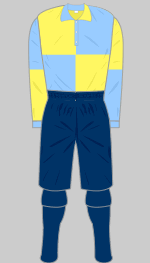
Athenian
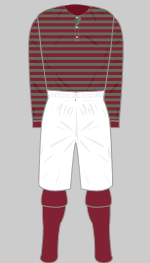
Balgay
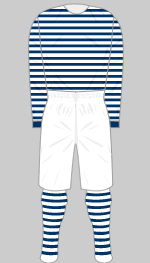
Barnes
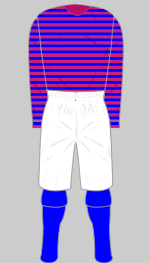
Birmingham
Presumably an amateur team, Athenian played in Edinburgh for just one season, 1887-88, in these wonderful pale blue and primrose "harlequin" shirts.
A Dundee side that existed only from 1880 until 1884, Balgay played in maroon and "drab" hoops before switching to black shirts for their last season.
Some claim that Barnes Club can trace their history back to 1838 but there are no records of any matches until 1862, when they played Richmond in the first match ever held under the new FA rules. Founder members of the FA they played in the FA Cup until 1886. They eventually switched to the rugby union code and stil play as a rugby club.
(Peter Ferrette)
This amateur team are not connected with the modern Birmingham City. They entered the FA Cup in 1879-80 when they were knocked out by Oxford University.
(Researched by Mike Bradbury, submitted by Robin Horton)
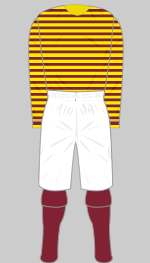
Birmingham Excelsior
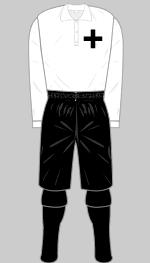
Birmingham St George's
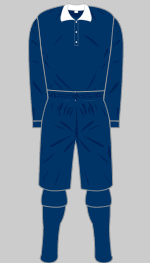
Black Watch
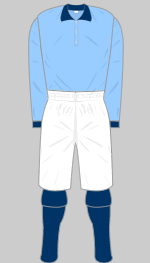
Blackburn Olympic
Excelsior wore maroon and yellow hoops in the 1870s before updating to vertical stripes the following decade. They made five appearances in the FA Cup between 1883 and 1888.
(Researched by Mike Bradbury, submitted by Robin Horton)
St George's were founder members of the Football Alliance and the only member refused a place in the Football League when the competitions combined in 1892. The club then disbanded. The graphic shows their original colours from 1888 - they later played in light/dark blue.
(Researched by Mike Bradbury, submitted by Robin Horton)
The famous Black Watch was the senior regiment in the Highland Brigade of the British Army and fielded a football team in whatever part of Scotland they happened to be based in (when they were not away fighting colonial wars). Their name was co-opted by several teams that played in black (notably Everton) and their tartan was worn by the 10th Lanarkshire RV team.
Formed in 1877, the team was made up of young factory workers. In 1883,
Olympic became the first northern club to win the FA Cup, breaking the
monopoly of the southern ex-public school teams. They were soon eclipsed by the new breed of professional clubs that appeared in Lancashire and they folded in 1889.
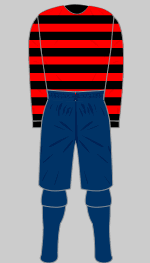
Blackheath
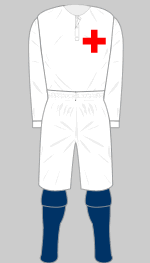
Blantyre Thornhill
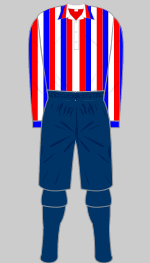
Brechin
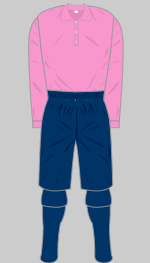
Broughty
Founder members of the FA, Blackheath later withdrew in protest over the banning of "hacking" (ie kicking opponents' shins). They helped from the Rugby Football Association and still compete at national level.
Formed in 1875 on the wave of enthusiasm that swept the West of Scotland in the mid-1870s, this Lanarkshire team entered the Scottish Cup in 1876 and then disappeared.
This club played between 1888 and 1896 and predates the two teams (Brechin Hearts and Brechin Harp) that merged in 1906 to form Brechin City.
Pink was never as popular in Scotland as it was in England but this team, from Broughty Ferry in Angus, are an exception. No record of the colour of their knickers survives so navy is assumed.
Burnley Rovers
Caledonian
Calthorpe
Cambridge University
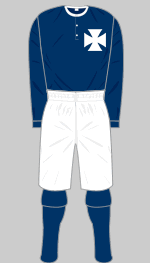
Formed in 1881 as a Rugby Union team, the club disbanded after one season and reformed as Burnley FC, adopting association rules. The Maltese Cross worn on their shirts was a popular motif at the time.
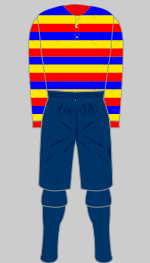
In the 19th century at least 20 Scottish clubs included Caledonia or Caledonian in their name. This team, which played at the Kelvinbridge Cricket Ground in Glasgow is the oldest, formed in 1875.
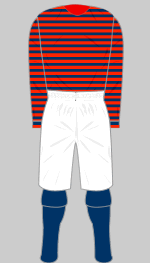
One of the Birmingham teams formed with strong Scottish links, the graphic shows their original colours of scarlet and navy. Later they wore navy jerseys and black/white hoops in the style of Queen's Park.
(Researched by Mike Bradbury, submitted by Robin Horton)
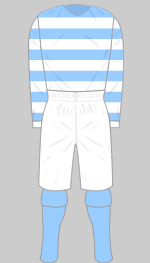
Recent research has revealed that the first attempt to draw up a universal
set of rules took place at Cambridge in 1848. The university football club entered
the FA Cup several times during the late 19th century but failed to emulate their Oxford rivals by winning the competition.
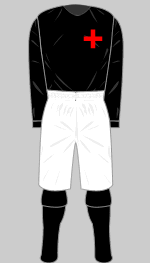
Cartvale
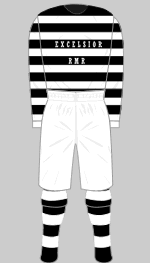
Chatham Excelsior
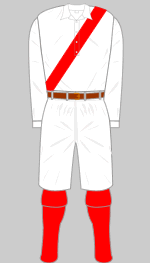
Chirk
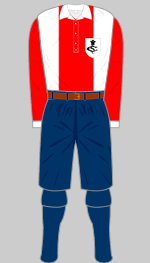
Civil Service
Formed in 1878, Cartvale played in Busby, Renfrewshire and originally wore black/white shirts followed in 1879 by plain white shirts and black knickers. The graphic show the colours worn from 1882 until 1886. They closed down in 1887.
The success of this Kent club in local competition led to the formation
of New Brompton, one of the first professional clubs in the south in
1893. New Brompton became Gillingham in 1913.
Founded in 1876, the Colliers are one of the oldest clubs in North Wales. Between 1886 and 1894 they won the Welsh Senior Cup five times but never reached the final again. The great Billy Meredith started his career playing for Chirk and the team continue to compete in the Welsh pyramid.
Founder members of the FA and participants in the first FA Cup, CSFC regularly toured Europe while former players posted as diplomats did much to foster the game around the world. They still play as an amateur side. To mark the 150th anniversary of the FA in 2013, the team played an exhibition match at Buckingham Palace wearing replicas of this 1893 strip.
(Peter Ferrette)
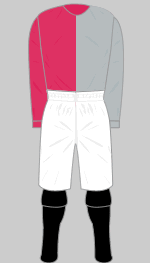
Clapham Rovers
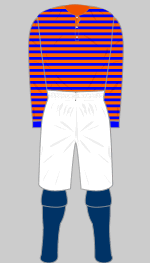
Clydesdale
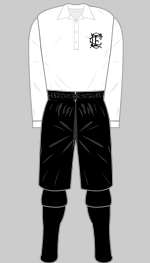
Corinthians
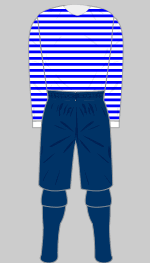
Crystal Palace
Formed in 1869, Rovers were runners-up in the 1879 FA Cup and winners the following year, wearing striking cerise and french grey tops. Shortly afterwards the club was wound
up. A new club was formed in 1996 and currently
plays Sunday League football.
Formed in 1872 in Glasgow, Clydesdale were one of the stronger teams in the West of Scotland and contested the first Scottish Cup final but were gradually eclipsed and folded in 1881.
In 1882 N Lane Jackson, assistant secretary of the FA, formed Corinthians to challenge the supremacy of Queen's Park. The country's top players joined the team (as amateurs they could play for more than one club) many of them internationals. The side would have won the FA Cup several times but
their constitution forbad entering any competition. In 1939
they merged with Casuals FC.
Not to be confused with the modern club, the original Palace was formed
in 1861 by groundkeepers at the site of the Great Exhibition. They were founder members of the FA and competed in the FA Cup between 1871 and 1876 after which
they seem to have disbanded.
(Peter Manning)
Derby Junction
Derby Midland
Dundee Harp
Dundee Hibernian
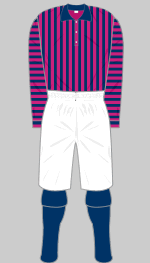
Formed in the early 1880s by old boys of Junction Street School, this amateur side reached the FA Cup semi-finals in 1887-88 after knocking out the holders, Blackburn Rovers before being beaten by the eventual winners, West Bromwich Albion. The club was wound up in 1895.
(Researched by Mike Bradbury, submitted by Robin Horton)
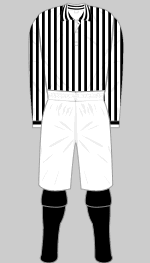
Derby Midland were founded in 1881 and became founder members of the Midland League eight years later. They reached the third round of the FA Cup in 1883-84 and second round the following season. In 1891 they merged with Derby County.
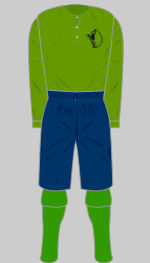
Following the demise of the old Dundee Hibernian, Harp represented the city's Irish/Catholic population until they were disbanded by order of the SFA in April 1894 for non-payment of match guarantees.
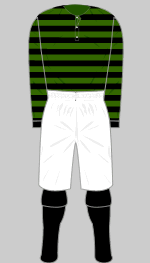
The first of three clubs with the same title, (the 1909 version became Dundee United), this club wore green like all the other teams that sprang up from the Irish catholic community. It disbanded in 1884.
Earlestown
Forest
Forrest
Gitanos
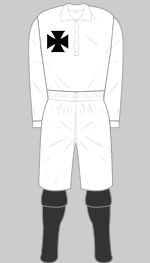
This side, from Newton-le-Willows, reached three successive Liverpool & District Challenge Cup finals in the 1880s, beating Everton 1-0 in 1884 to win the trophy.
(Steve Flanagan)
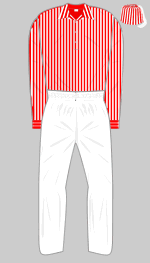
Not to be confused with Nottingham Forest, this club was formed in 1859 in Leytonstone. In 1864 they fetched up in Battersea Park and became The Wanderers, one of the greatest of all Victorian teams. These early shirts resemble those worn in inter-house competition at Harrow School and may well have been introduced by former pupils.
(Peter Ferrette)
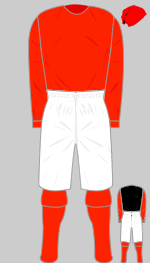
The second Forest (or Forrest) FC was formed in 1869 five years after after the original team had changed its name to Wanderers. Their unique jerseys were red on the front and black on the reverse.
(Peter Ferrette)
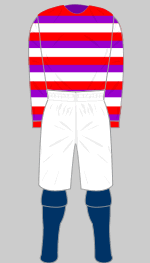
There is not a lot I can tell you about this team. Based in Battersea Park, they played and lost to Uxbridge in the first round of the 1873-74 FA Cup and were never heard of again.
(Peter Ferrette)
Glasgow Hibernian
Glenarnott Thistle
Grahamstown
Grasshoppers
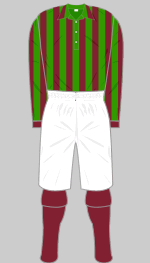
Formed in 1889 as an offshoot of Celtic (formed the previous year), this team folded in 1891.
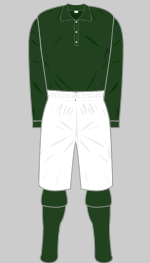
Formed in Ecclefechan in 1897, Thistle wore myrtle green shirts during their brief, two year career.
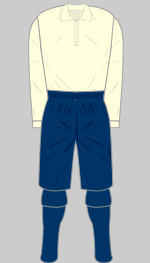
This Stirlingshire team was formed in 1882, adopting unusual cream shirts in 1886. They went out of business in 1896.
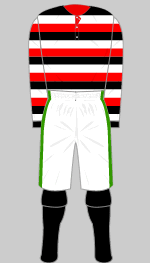
The graphic shows the Stirlingshire side's original colours from 1875. Formed in Bonnybridge they became Longcroft Thistle in 1886, folding in 1901.
Hackney Black Rovers
Hallam
Harrow School
Hertfordshire Rangers
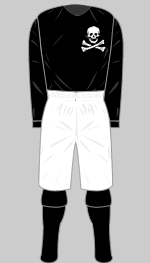
This team, with its wonderful piratical jerseys, is mentioned in Volume 8 Issue 58 of Blue Blood, George Orr's Historical Everton fanzine.
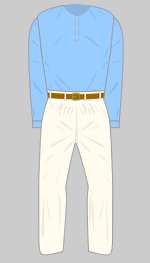
According to a report in the Sheffield Telegraph (28 December 1860) "players wore the blue garment of the Hallam club" in their first ever fixture against Sheffield FC. The second oldest club in the world are known to have worn light blue around the end of the 19th century and it seems likely this was the shade worn from their formation. Cricket whites may have been worn by some players.
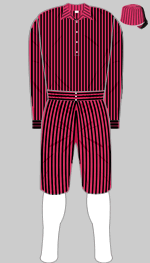
Harrow
still play their unique version of the game today, with teams competing in the inter-house competition wearing their own unique striped shirts. This kit was probably worn in the annual match with Harrow's old boys team.
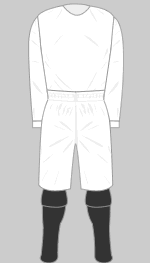
Formed around 1865, Rangers featured in the FA Cup between 1875 and 1881. In 1898 they merged with Watford St Peters to form the modern Watford FC. A club bearing the same name was formed in 2001.
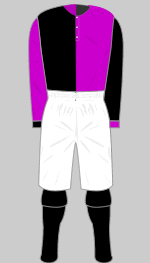
Hitchin
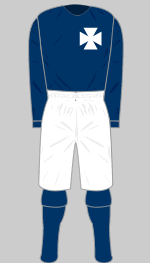
Hotspur
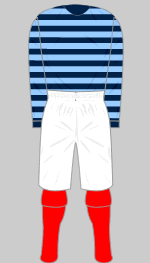
Kinleith
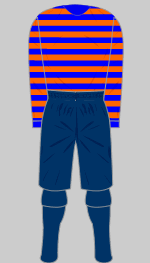
Kirkintilloch Central
Formed in 1865, Hitchin played in the first FA Cup. They later
turned professional but were wound up during the First World War. Their successor, Hitchin Town, formed
in 1928 plays in the Southern League.
Not to be confused with the Spurs from North London, this team was formed in 1878 and played regularly in the FA Cup. By 1886 they were based in Wimbledon but went out of business a decade later.
Kinleith played in Edinburgh between 1880 and 1884 wearing an attractive combination of varsity hoops and red hose.
Dunbartonshire was, alongside Lanarkshire, the crucible of Scottish football with several teams springing up in Kirkintilloch. Central played 1885-90 in startling blue and orange jerseys.
Leyton
Liverpool Ramblers
Long Eaton Rangers
Mackenzie
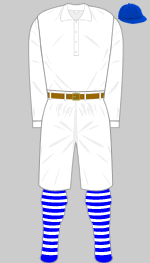
Formed in 1868, Leyton are one of London's oldest football clubs. In
1910 they folded having briefly turned professional.
Reformed in 1919, Leyton still exists as an amateur club.
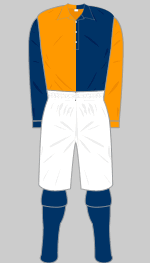
Formed in 1883, the Ramblers entered the FA Cup until 1886 since when they have steadfastly stuck to the strictest of amateur principles, playing only friendlies against school and club teams.
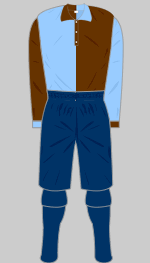
Rangers were based in Derbyshire and were founding members of the Combination (1888) and the Alliance (1889).
(Researched by Mike Bradbury, submitted by Robin Horton)
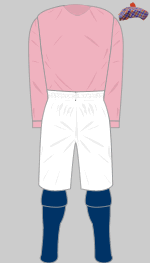
Based in Sheffield, Mackenzie took part in the
Youdon Cup in 1867, the world's first football tournament, played under Sheffield Rules. The name and plaid bonnet suggest a Scottish connection.
Malvern College
Manningham
Marlow
Morpeth Harriers
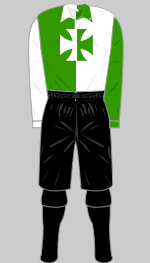
Malvern are one of the many public schools that played their own version of football before the FA drew up the first unified rules in 1863. The strip shown here dates from the end of the 19th century.
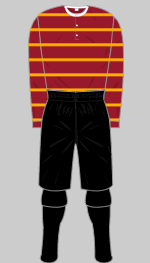
In West Yorkshire rugby was more popular than the association game in the late 19th century. Manningham RFC, formed in 1880, later fell on hard times and became Bradford City AFC in 1903. The association club inherited Manningham's distinctive claret and amber colours.
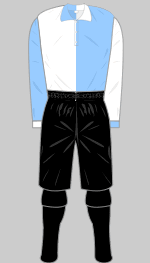
Also known as Great Marlow FC, Marlow (formed in 1870) holds the unique distinction of having entered every single FA Cup competition since its inception bar 1910-11 when their application arrived a day after the deadline.
(Peter Ferrette)
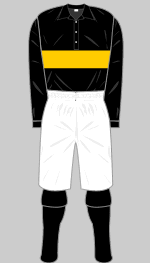
A five match marathon against Shankhouse in the Northumberland Cup of 1885-86 failed to reach a result. The captains tossed to see who would go to the final on condition the winner would represent both teams. As a result Morpeth became joint winners even though they did not reach the final.
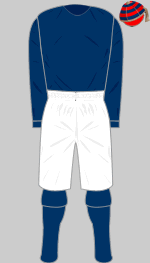
Newcastle Association
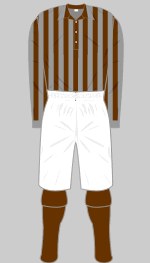
Newton Stewart Athletic
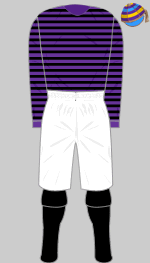
Norfolk
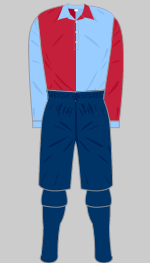
Old Carthusians
Also known as Newcastle FA, the team was formed in 1880 and enjoyed a prominent if brief career, closing down in 1885. They adopted black jerseys in 1884 and then cardinal and light blue quarters.
Based in the Wigtonshire town of Newton Stewart, Athletic existed from 1881 until 1902. They played in these extraordinary grey and chocolate shirts 1891-95.
Despite the name, this was a Sheffield based club that apeared in the
Youdon Cup in 1867.
Established in 1875, the club comprised former pupils of Charterhouse
School. They won the FA Cup in 1881 and the FA Amateur Cup in 1894 and
1897. The club still exists and plays in the Amateur Football Alliance.
Old Etonians
Oxford University
Pilgrims
Pollokshields Athletic
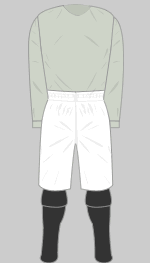
Formed by Lord Kinnaird, a former pupil of Eton College, and one of the most influential footballers of the age, the club appeared in six FA Cup Finals, winning the cup in 1879
and 1882. In 1883 they were beaten by Blackburn Olympic in the final. They later played in quartered and halved jerseys.
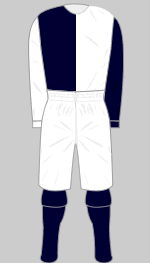
Formed in 1872, the club won the FA Cup in 1874 and were runners up
in 1873, 1877 and 1880, the last year they competed. No fewer than 29
players were capped for England.
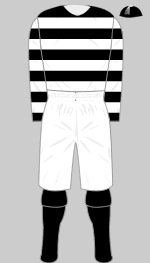
This club first entered the FA Cup in 1873 and appeared every season until 1885 but I can find no trace of them after that.
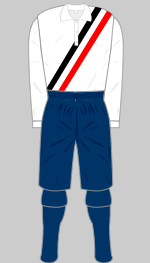
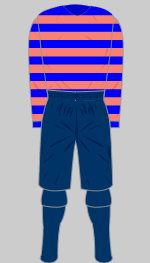
Formed in 1875, Athletic played in this strking outfit between 1884 and 1887. They disappeared in 1890.
Prudhoe Rovers
Queen's Park
Rangers (Newcastle)
Reigate Priory
Rovers (formed 1882) were based in the industrial Tyneside village of Prudhoe that boasted a pit and brickworks. In March 1884 they beat East End (now Newcastle United) 4-1.
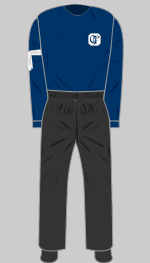
Scotland's oldest club, formed in 1867 competed
in the English FA Cup 1872 to 1885. They provided all 11 players
for the first Scotland England international in 1872 and developed the passing game. By playing exhibition games throughout Scotland, they were largely responsible for the rapid spread of the game north of the border. Scotland still wear navy and white, Queen's Park's original colours.
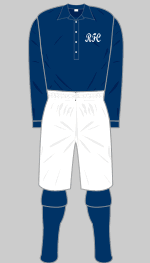
Formed in 1878, Rangers and their main rivals, Tyne FC were the most important clubs in Newcastle until the rise of East End and West End. Initially based in Gateshead before moving to a site on Castle Leazes, which they named St James' Park. Rangers folded in 1885 and their old ground is now home to Newcastle United.
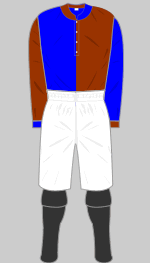
Priory were formed in 1870 and entered the first FA Cup in 1871-72.
They still exist as an amateur side in the Redhill and District Saturday
League and have a thriving junior section.
Rendel
Rob Roy
Royal Artillery
Royal Engineers
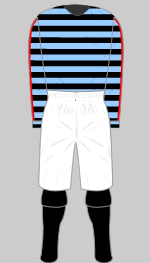
The 1890 Northumberland Challenge Cup final between Rendel and West End was billed as Northumbrians v Scots because the Rendel team was made up of locals while their opponents were mainly Scottish professionals. Shown here are Rendel's original colours from 1881.
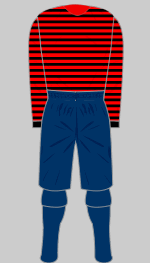
Several teams took inspiration from Scottish literature, none more so than this senior Perthshire team formed in 1878 and disbanded 1899. No fewer than five junior teams also adopted the name.
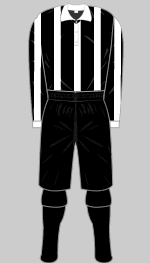
Based in Portsmouth, RAFC competed in the Southern League until they were banned for professionalism after players spent a week at a health spa at the army's expense. Portsmouth FC took their place. Burnley FC wore striped shirts in a similar pattern around the same time.
(Richard Essen)
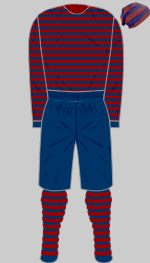
Formed in 1862 under the captaincy of Major F Marindin, the army club
were beaten FA Cup finalists in 1872, 1874
and 1878, winners in 1875. They were the first side to adopt
a team approach to the game, passing the ball to each other rather than using the standard kick-and-rush tactics of the time.
Ruabon Druids/Derwyddon
Rushall Rovers
Saltley College
Shankhouse Black Watch
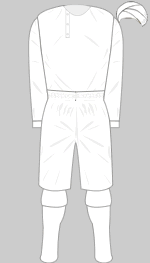
Wales' second oldest club were formed as Plasmadoc FC in 1869, merging with Ruabon Rovers and Ruabon Volunteers in 1872 to become Ruabon Druids. They won the Welsh FA Cup eight times in 13 appearances
between 1879 and 1904. Their new strip in 1876 was white jerseys, knickers, socks and turbans. They play to this day in the Welsh pyramid.
(Dylan Jones)
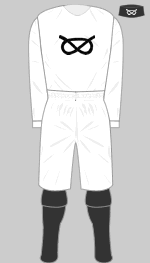
Based in the mining village of Rushall, near Walsall, Rovers wore the Staffordshire knot, a popular motif among midlands teams, and fetching pill-box hats in 1876.
(Researched by Mike Bradbury, submitted by Robin Horton)
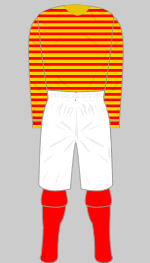
One of the early pioneers of the game in the midlands, Saltley College were based near the centre of Birmingham.
(Researched by Mike Bradbury, submitted by Robin Horton)
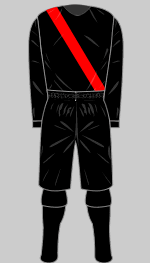
Shankhouse were one of the strongest of many colliery teams that sprang up in the north-east. Formed in 1884, they played Aston Villa in the 1887-88 FA Cup and reached seven Northumberland Challenge Cup finals between 1885 and 1895.
Sheffield
Sheffield Heeley
Sheffield Zulus
Shotts Ironworks
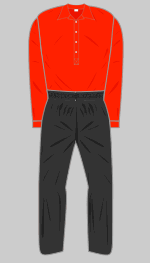
On October 24th 1857 the world's oldest football club was born. The
members organised matches between themselves and were instrumental in
forming the Football Association in 1862. It is unclear when they adopted their earliest colours of scarlet shirts but this is likely to have been when they started playing other clubs after 1860. Sheffield continues to thrive
to this day.
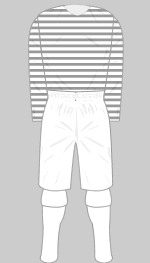
One of the clubs that sprang up in Sheffield in the early 1860s, the team took their name from the suburb where they played. Founder members of the Sheffield FA, they took part in the Youdan Cup and won the Sheffield Challenge Cup in 1882. They entered the FA Cup in 1883, 1889 and 1890.
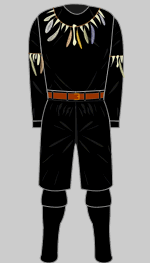
Formed in 1879, this team played exhibition games in Sheffield to raise money for widows of the Zulu Wars. Players blacked up and paraded with Zulu regalia before games. They were ordered to disband in 1882 for infringing the amateur rules of the time after it was revealed that they were offered payment for appearing.
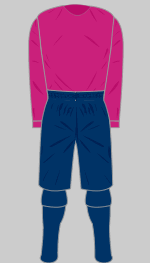
This Scottish works team existed for a single season (1876-77) and are included for their magnificent magenta tops.
St Mary's & St James'
St Michael's
Stafford Road
Stevenston Athletic
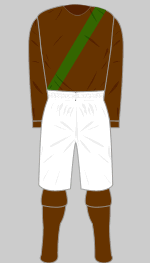
One of many minor clubs that sprang up in Newcastle, the team was named for the historic St James' Chapel and the 12th century St Mary Magdalene Hospital that once stood in the area. These colours were worn when they were founded in 1884.
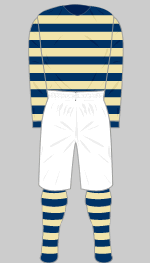
Properly known as St Michael's Guild Athletic Club, the team were based in Alnwick in northern Northumberland and were formed in 1883. Their distinctive colours were buff and blue.
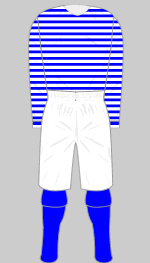
The club was the works team of the Stafford Railway Works in Wolverhampton. Formed in 1879 wearing blue and white, they later adopted plain white tops, black and white hoops and finally red/black halves before folding in 1888. Several of their best players went on to sign for Wolves, including Dickie Baugh, who won his first England cap while with Stafford Road. (
Robin Horton)
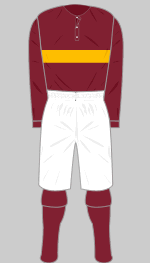
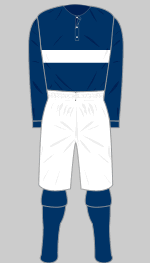
Thistle played in the various Ayrshire leagues from their formation in 1885 until their demise in 1903. This attractive maroon and amber top is from 1888-89.
Stockton
Sunderland Albion
Thistle
Turton
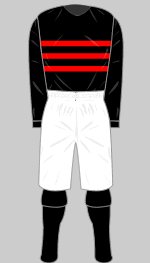
The Cleveland area was a bastion of amateurism in the 1880s and although Stockton flirted briefly with professionalism as did their great rivals, Middlesbrough both swiftly returned to amateurism.
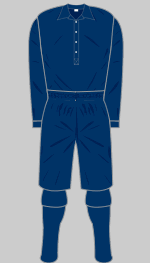
An acrimonious split over payments to players led the founder of Sunderland FC, John Allen, to form a rival club in March 1888. After a bitter running battle with their parent club, Albion closed down in August 1892.
This team were based in Edinburgh 1874-1900. A Glasgow club with the same name played briefly in the Scottish League.
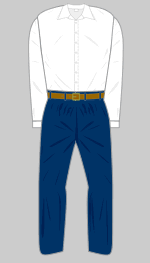
Formed in 1871 in Chapeltown, in the Bolton district of Turton, this club dropped the Harrow Rules in 1874 in favour of London Rules, thus becoming one of the first association football clubs in Lancashire. They still exist.
(Peter Ferrette)
Tyne Association
Upper Clydesdale
Uppingham School
Upton Park
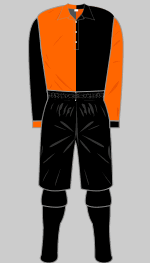
The first association club to be formed in Newcastle, Tyne AFC were founded in 1877 and were the city's premier team for several years. They were gradually overtaken by other sides and closed down in 1887.
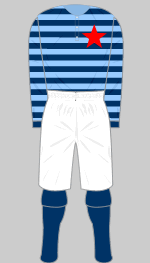
Based in Rutherglen, an area of Glasgow famous for its shipyards, Upper Clydesdale existed for just four seasons from 1878. The red star stitched onto their hooped jerseys makes for a fine contrast.
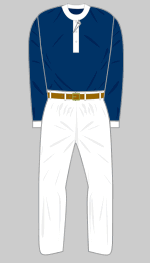
In 1862, a teacher at Uppingham School in Rutland, drew up a set of rules that banned hacking and charging players in offside positions. This less violent form found favour with several other public schools at the time.
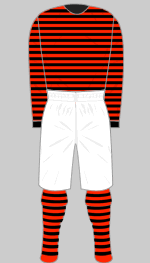
Formed in 1866, Upton Park played in the first FA Cup. In 1884 they lodged a complaint against Preston NE after the northern club had beaten them in the Cup, alleging their players had been paid. Preston were disqualified but the incident forced the FA to deal with the growing issue of profesionalism, which was recognised a year later.
(Peter Ferrette)
Vale of Atholl
The Wanderers
Warwick County
Weyside
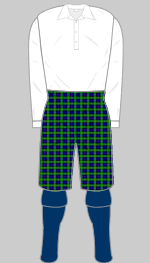
Formed in Pitlochry as Vale of Athole in 1878, the club never rose above the Perthshire League but are included for these wonderful breeches, made from the Atholl tartan, worn in 1888-89.
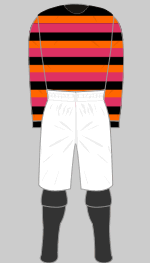
Previously known as Forest FC, the team changed their name in 1864 when they moved to Battersea. Wanderers won five FA Cup finals in seven years including the first in 1872. Players were selected from the various former public school clubs but as these began to enter the FA Cup in their own right, Wanderers declined and were were wound up in 1887. Shown here are their original colours.
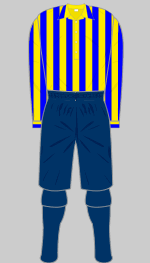
In 1881 Warwickshire Cricket Club formed a football section which played at Edgebaston during the winter months. In 1888-89 they knocked Stoke out of the FA Cup and then joined the Midland League but they were expelled after two seasons, following which they were wound up.
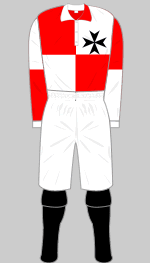
Aside from a description of their 1870 harlequin jerseys, no other records have survived of this club who were probably based in Surrey. They were one of the first clubs formed in the Home Counties.
(Peter Ferrette)
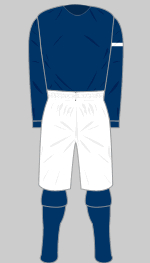
Whiteinch
Whiteinch was a shipbuilding district west of Glasgow city centre. In Scots an "Inch" was a sandbank, a feature that had been dredged out of the Clyde when the shipyards were built. The local team formed in 1874 had a one-inch white stripe sewn into the left sleeve of their shirt. White-inch. Oh dear.
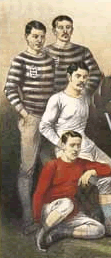 Before professionalism was recognised by the Football Association in 1885 the game was strictly amateur and dominated by teams of gentlemen-players with roots in the public school system, where the game had evolved. The exotic colours of some of these early teams were often inspired by those public schools where the players had been educated.